Category: Travel

  • Fuselage QB & Finishing Kit Pickup – RV-10 Flight

    Fuselage QB & Finishing Kit Pickup – RV-10 Flight

    I got a call during spring break that the fuse QB and finishing kit were ready to be picked up. This was 5-6 months ahead of schedule but definitely welcome news since September and October are usually marching band months for our family. I got time off scheduled for work, rented a 24′ enclosed trailer and planned our route. It took us ~28 hours to drive the entire route.

    Our route took us up through Kansas, Colorado, through the bottom portion of Wyoming, the top tip of Utah, Idaho and into Oregon. The best part of the drive was when we got into Oregon. The route basically took us along the river between Washington and Oregon all the way to Portland. It was beautiful country!

    It also ended up being towards the end of the day so we were running out of light fast, but it created the best views of the valley that the river flowed through. It was also VERY windy and took alot of concentration to make sure we didn’t deviate from our lane with the trailer pushing us around.

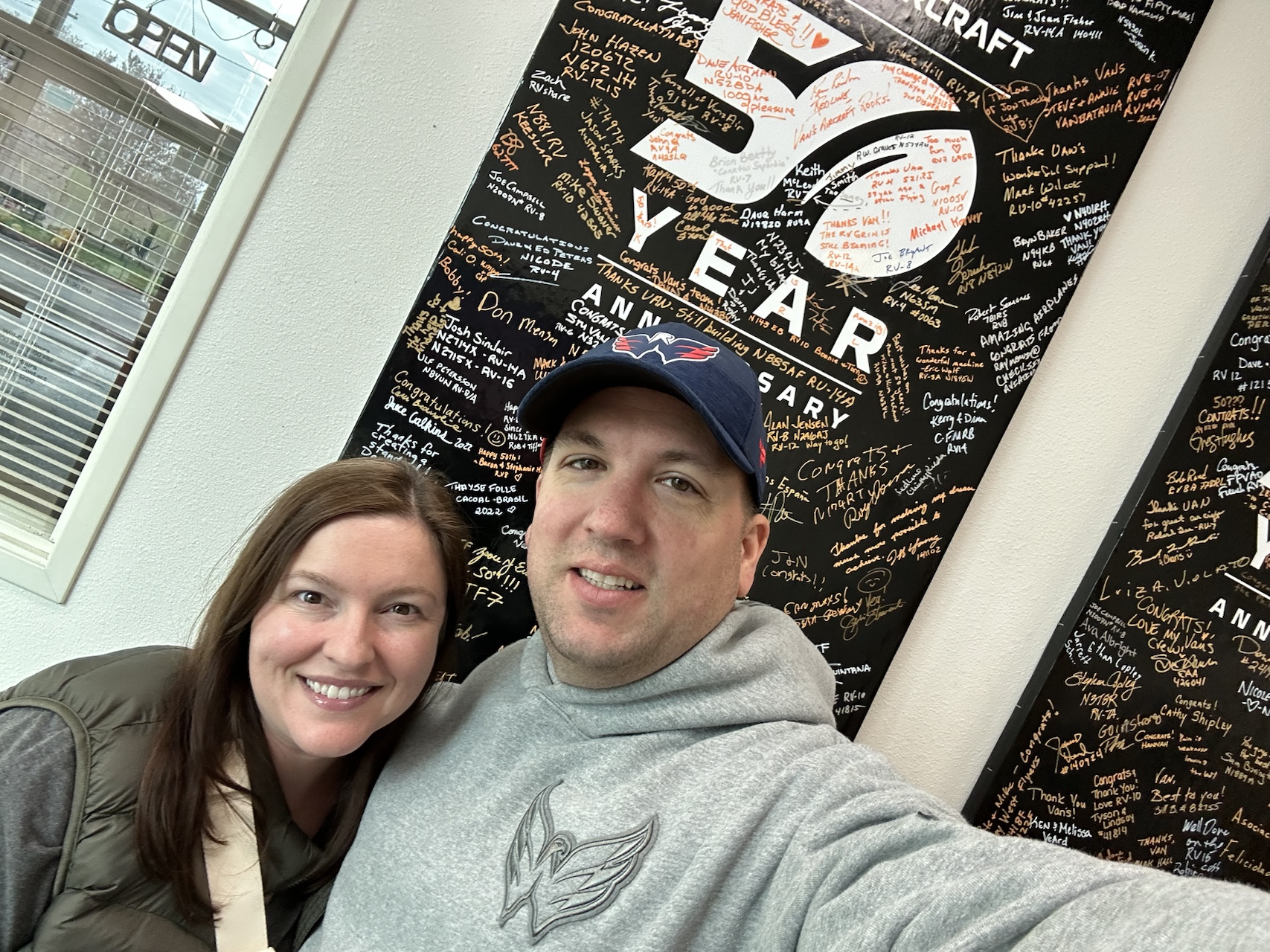
    On Wednesday morning, April 2nd, we woke up and drove to Van’s Aircraft which was just south of the hotel we were staying at. We went around back and picked up the crates we came for which the warehouse worker stated were just two crates. I think he was remembering the non-QB fuselage which is one crate and the finishing kit which is the other. Luckily I checked with someone back in the building and they reminded him it was indeed three crates. That would have been very inconvenient if I had traveled all the way home missing the biggest crate which is the QB fuse. Since there wasn’t much time between learning this and the factory tour, we decided to do it after the tour and flight was completed. I forgot to take pictures of the factory while we were going through because I was so mesmerized just taking in all of the organization of parts, machinery to form components, and assemblies being completed such as spars being riveted, and even a factory built RV-12 being finalized in its assembly.

    We then got the chance to go for our first flight in the RV-10! I was blessed to get this opportunity as the weather reports continually showed that it was going to be overcast and raining during that time, but thank the Lord it cleared up and we were able to go flying! When they opened the hangar I realized that the aircraft that was at Oshkosh this past year was the same aircraft that was the original yellow, blue, and white aircraft they use to demo with but it had just been redone. They had completely redone the paint and had a brand new glass panel put into the aircraft. So, if you want to see what it looked like inside, go and look at my Oshkosh 2024 post and I have videos there of the interior. I have to say that the RV is way easier to get in than any other aircraft I have flown, except maybe the Cardinal. They are very close when compared from the pilot’s perspective, but the passenger ability to get in is much better than the Cardinal. Once in, everything was well organized with the Garmin glass panels.

    The performance of this aircraft was amazing! I’ve not flown in any high-performance aircraft before, but that IO-540 with the 3-blade prop made for excellent acceleration and we were off the ground very quickly even with three full sized adults! We also made it to pattern altitude very quickly with around 800 fpm climb, if not more! Keith was our demo guy, who was the guy I had talked too earlier this year about my misdrilled hole. It was good to get to actually see him in person now.

    The visibility from the cockpit was amazing! I was surprised that even without a back window, I could still see pretty far behind me if I had to. The flight angle of the aircraft was also surprising. I had greater forward visibility than I’ve ever had in an aircraft. It could also have been the seat positioning, but it sure looked like the nose was lower down so I could see further forward. Also the windows going down the sides allowed me really good visibility around the nose compared to the Piper’s I’ve flown in the past. It was just amazing to watch the Garmin system manage the aircraft both from a flight control perspective with the autopilot but also from the engine management that you could see from the Garmin interface. I was also surprised at how easily their engine started up too. It was like my car with how easy it started! I’ve never had that experience before, even with the newer aircraft that I flew with Monarch Air which was only about 6-7 years old.

    There’s just so much that was amazing about this aircraft and I am definitely glad that my research was spot on even without flying the aircraft LOL Kind of hard to back out now I would guess. The aircraft flew very easily. The vertical control was lighter than the roll control but it was very easy to keep the plane on track and the two finger controllability they talked about is not an exaggeration if you are just maintaining straight and level flight and making gentle turns.

    We then headed back to the airport and landed. The aircraft was actually very easy to taxi on the ground even though you don’t have direct control over the nose wheel to steer around. Just a little bit of braking helped with maneuvering around.

    After we got back we loaded up the final crate and we said goodbye to Van’s Aircraft! The next time I will visit them will be to show off our finished airplane to them here in the next few years!

    With everything squared away, we decided to take a bit of a rest day. They recommended we go to the Evergreen Aviation Museum. It had some good displays in there, but the gem of the whole thing was to get to see the Spruce Goose. I’d seen the old news reels and pictures of the aircraft, but to see this thing in person put “massive” to a whole new level. This thing was so big! They said it was as tall as an 8 story building, which I can definitely believe. The thing took up the entire hangar with other displays littered all around it. The plywood construction was amazing to see as they had cut a hole into the plane for easy entrance to see the plane through out. I took an up-close picture of the layering and it was amazing since most of the plywood you will see in any lumber yard is often questionable. Even the best pieces that are meant for furniture or other display purposes are not as pristine as this was. Even the reinforcement brackets for gluing the components together were made out of small layers of plywood as well. It was amazing to look at! There was an old gentleman there that works at the display that wrote a book about its construction process and he had cited sources for all of the details on the planes construction. I couldn’t pass that up as it would be amazing to see how this was done.

    We then went to the local Deseret Bookstore which was actually the best store we’ve been to so far. Granted we’ve not been to one in Utah, Arizona or Idaho, but I was surprised at how well this one was stocked. Even better than Dallas which I figured would have been pretty good. We then spent a good amount of time at the local temple in Portland. It was so pretty and I always love seeing the different architecture of these buildings with each place we visit.

    The next day we started our long trip home. It took the same amount of time (~28 hours) and was definitely the hardest because I was excited to get the parts home and I had already been driving alot already. We had to stop at the Buc-ee’s both on our way and back so that we could enjoy that little bit of heavenly oasis on our trip. I am glad we were able to make this trip and that everything went extremely well!

    When we got home, we opened the crates after getting home to make sure everything looked good. I also was able to finally complete the entire build manual in my three ring binder. I’m glad everything got home without an issue! All in all we logged just over 3,700 miles and made a ton of pit stops at all of the Love’s gas stations along the way. We burned through 484.56 gallons of diesel to get there. I wish I had tracked how much def I used but it was about 20 gallons as I had to fill up 5 times and it was about 4 gallons each time. In total I spent $1,599.79 on fuel alone. The wind was the biggest contributor to my mileage. The trailer is not very heavy, even with the crates, but the trailer has a large profile and the wind could push on it quite significantly. My average gas mileage this month was 9.115 mpg. That’s as bad as when I’m pulling the fifth wheel RV which weights just over 12,000 lbs. This trailer with the crates on it is no more than 5,000 lbs. The trailer was 3,360 lbs., the finish kit was 431 lbs., the QB fuse was 818 lbs., and the cabin cover crate was 350 lbs. We were extremely blessed thought. We didn’t hit any major weather on our trip and though the wind was strong, it wasn’t unmanageable. Also the weather cleared up for us for our flight on Wednesday and everything made it home safely with no tire blowouts on the trailer! Very grateful for all of this and I’m excited to get the wings finished, which I finally got more primer right before we took off for Oregon. I’m also still glad we went to get it so we knew the crates would make it without any damage and the parts would be safe. It was also good to go see the Van’s Aircraft facility and see where things are coming from and the quality and care they put into everything.

  • EAA AirVenture 2024 & Fiberglass Work

    EAA AirVenture 2024 & Fiberglass Work

    It has been too long since I’ve been able to work on the airplane. Kids’ activities (and the volunteer work to go with it), church service, my school work (I’m now working on my MBA through WGU), and trying to spend more time with the kids has taken alot of it from me. I hope to try to swing more time with my kids while building the plane as they showed interest in continuing to build with me while we were at AirVenture this past week.

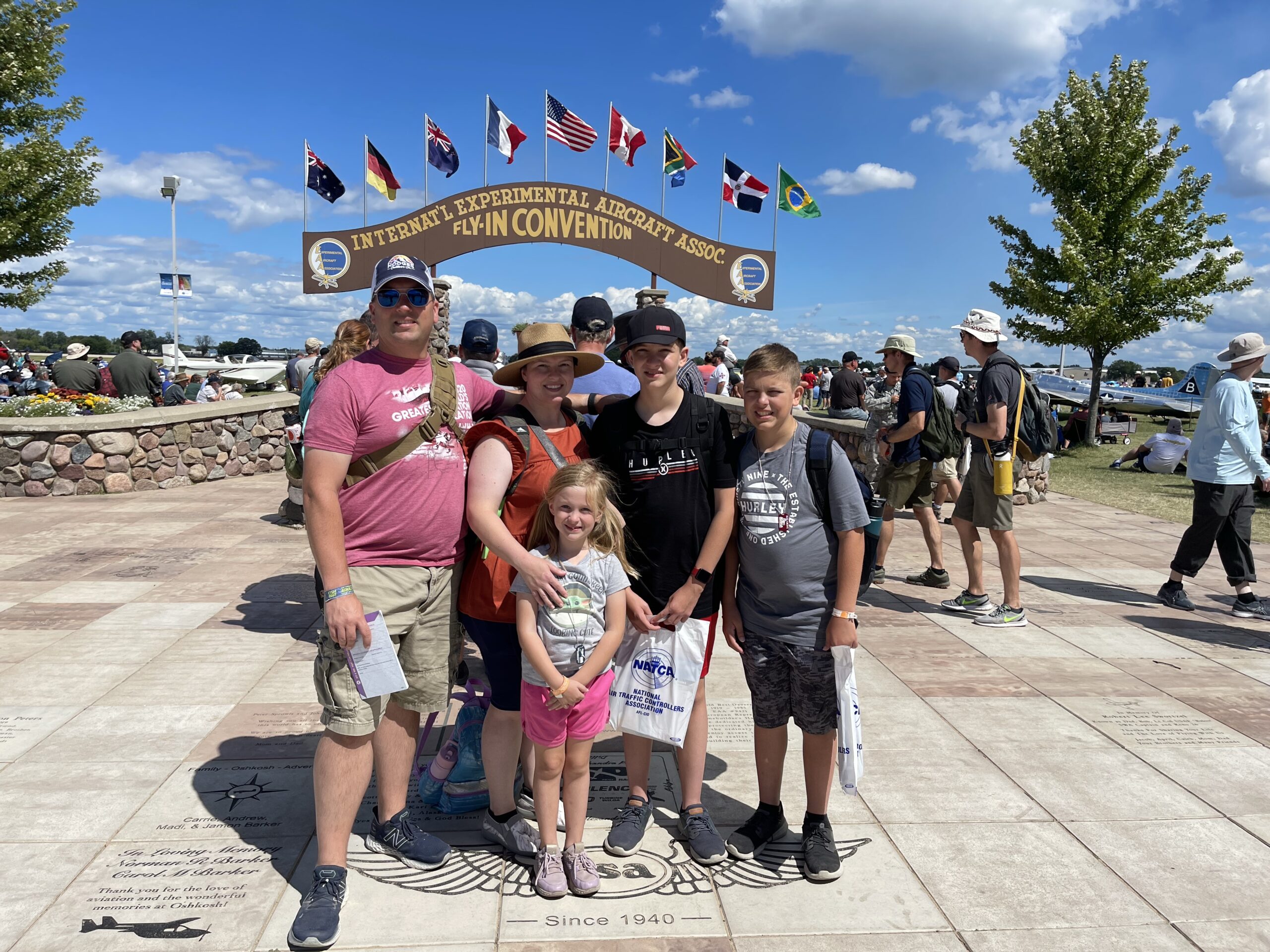
    AirVenture was a blast as always! We plan to return in 2026 and make our avionics purchases then. We are going to purchase the quick-build fuselage next year along with the finishing kit and firewall-forward kit. So hopefully we can pick it all up at the same time around the same time as AirVenture 2026. We plan to drive to Oregon to pick it up as it will be an opportunity to see their facilities and plus it will be saving quite a bit of money in freight costs and it’ll be a good time for my wife and I to spend time together in the car.

    My wife and I visited the new display plane that Van’s had for the RV-10 model. It was very well done and I even got a chance to sit in it. It reminded me of what we are shooting for and is giving me more desire to want to finish the plane!

    While as AirVenture I did two fiberglass classes. One was the short snippet of the fiberglass for RV’s class put on by the EAA. It had some great tips for how to cut the fiberglass, how to work epoxy into it, shape it around difficult shapes, etc. I then took the fiberglass 101 class, which had a hands on practical at the end. It was great to get some very basic experience and it gave me the courage to finally start tackling my own fiberglass work at home. I had also taken their fiberglass 101 class online back in January and I ordered the practice kit, but that did not arrive until early July because it was on backorder so I just decided to wait until I could take the class at AirVenture to have someone there with me. I want to do the practice kit at home now to solidify more of what I learned.

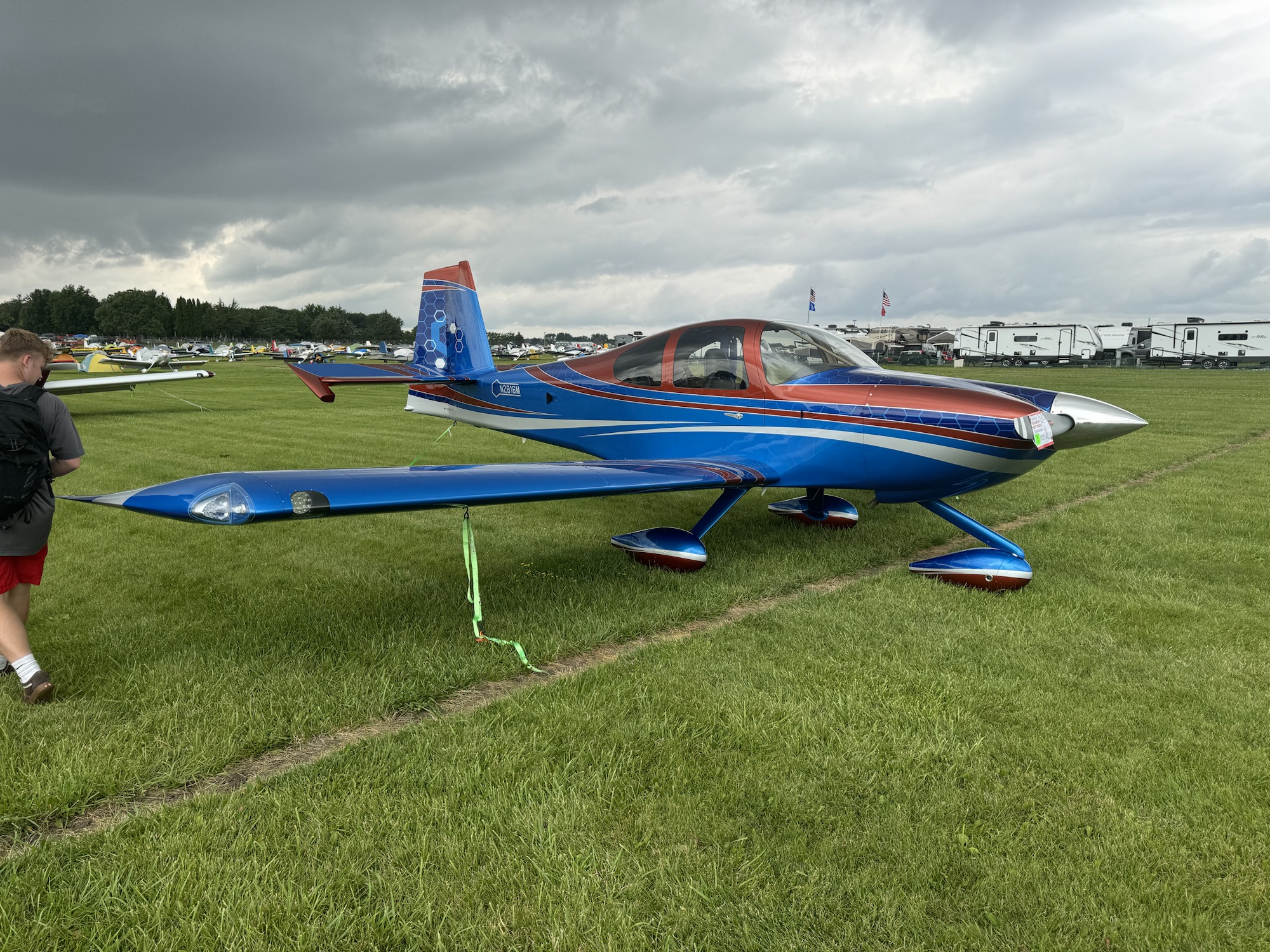
    The one RV-10 that stood out amongst all of them (of which there were many super great builds) was this one – N2816M. I’m not a fan of the paint job personally, but the level of detail on this plane and how well things were done was superb! I didn’t take a picture of this but he put a wedge on the left side of the rudder to tune the yaw in the plane. It was very nicely done and almost invisible to see. Better than having to put a trim servo in or some other mechanism. He also had fiberglassed all of the open control surfaces so it looks very smooth and didn’t have the open weight reduction holes.

    I started working on shaping the foam block to back the rear portion of the horizontal stabilizer tip fairing. It took a long time just to get where I am now but I’m still not satisfied with it. It is close but it is still protruding too much on the edge. I hope to get that shaped appropriately tonight when I have some time after church.

  • Airventure 2022

    Airventure 2022

    My family and I went to Oshkosh this year and stayed the entire week (Mon-Fri). I am overwhelmed with how much there was to look at, watch, and to learn about while I was there. I wanted to list some of the key takeaways from Airventure and lessons I learned for future reference in this build.

    Engine Selection

    I got a good chance to look at the Lycoming engines and the different options they have. I thought an IO-540 was an IO-540 but they have a ton of different submodels. The D model is what Van’s recommends and sells, but I’ve seen in forums where some users are using the K model. I also found a plane that was using an X model but I am not finding reference to that on Lycoming’s information. I’m going to have to search around on the Van’s Air Force forum or other places to see what that engine is. I couldn’t find the owner as it was just parked out there and I even waited some to see if he/she might return but no luck.

    They had the IO-580 on display which had the exact same dimensions as the IO-540 except for it’s height. It was 2 inches taller. But the power you got from it was very impressive. It was achieving 315hp in almost the same footprint. I decided to not go with it as it is not what Van’s recommends, and after reviewing some of the Van’s forums there were some issues with running the recommended props on anything higher than 300hp. I am looking to get as close to the 290hp I can get though which I am looking to see about that K model IO-540 and if it is worth upgrading to, or should I just stick with the IO-540-D since it is cheaper.

    I also read through their marketing for the Lycoming EIS. It is definitely super nice, but it looks like they designed it to replace existing magneto based installations and not brand new installs. So this might not be something I get but it was cool to see and learn about.

    Avionics

    I visited with vendors from Garmin, Avidyne, Advanced Avionics, and Dynon. Garmin was the most complete. They sell everything you would need to make this function so it’s almost like an easy button to get your avionics suite setup. I am almost much more familiar with their products as I’ve flown with them since I started flying either with the G1000 the 430s or the 650s. I was also very impressed with their Garmin Pilot EFB! I had never used it before but it was very well done and might be something I switch to if I end up going Garmin in the plane.

    The next I was impressed with was Avidyne. The look and feel and usability just seemed more fluid and I already understood how to use the majority of the system because their IFD550/545, IFD540/510, and IFD440/410 looked almost like a Garmin 430 and the larger 530. But that was also my hangup. I’ve gotten more used to the GTN650/750 which has more screen real estate and fewer buttons. It just felt a bit dated with those buttons on the outside. But I could also see the advantage of keeping those buttons with getting quick and tactile access to commonly used functions. They also had the IFD100 iPad application to go with it that made remote control of the radios much easier even in turbulence if you could just use it on the iPad. I didn’t like their PFDs as much, but they were okay. Avidyne did not have a complete package as well. You would have to work in a hodgepodge of different components to make it work. This might not be as bad as I’m thinking it would be, as my current experience of working with multiple vendors to make a single solution to function properly constantly has each one of them pointing fingers at the other. I’m imagining this would be the same situation if you had an issue between these disparate systems.

    The final one that I was interested in was Dynon. I really loved their PFDs. These were super nice and I loved the angled button edge which would allow me to perch my fingers on during turbulence. They also had a really nice refresh rate and made their display smooth. They didn’t have a navigation solution and would have to be supplemented with an Avidyne or a Garmin, but it seems like they have everything else. Their autopilot looked like it would fit the bill for me, the remote radio panels were really nice to segment the radio coms to a separate panel, and I liked how they already had package examples setup for different levels of equipment. Of course I liked the Airliner package as it had some great screen real estate, but I don’t think I would need that third PFD. But the Cross-country Cruiser was also a nice package, but I would just want to add the navigation source like an Avidyne or Garmin. I would want to get people’s experiences around each of these different platforms before I made a final decision. Garmin was a bit more expensive, but they are also giving you a full platform to implement and they are also using newer and faster communication styles such as Ethernet with Serial backup.

    Below are some Avionics installs that I liked and their placement. They all had good cockpit flow to them and some of the commercial ones I’m imagining they have put alot of research and development behind to make sure the flow was good.

    Propeller

    I had a really good and lengthy discussion with the Hartzell team in regards to the propeller and how I should select it. He stated that getting a two blade prop would give me good top end speed but sacrifice takeoff performance, while the three bladed prop would be the opposite. I honestly have never looked into those details so it was really good to get some details on why I would select one prop over another. They didn’t have any printed material for me to look at but they showed me that they have details on their website regarding specific props for the RV-10. They also suggested that I talk with Van’s as well as go through the forums and see what other’s have done and how they feel about its performance.

    Lighting

    I was absolutely sold on the AeroLED’s solution that they worked on with Van’s Aircraft on their new carbon fiber wingtips. The AeroSun VXi wingtips are going to be an almost all in one solution for my lighting with its NAV, ACS, POS, and Landing/Taxi lights all in the wingtip units. The only additions I would want is the Suntail light for the back of the rudder as well as the Sunbeacon II for the beacon light. But I’m still mulling that over as they stated these wingtips will meet the requirements for lighting across the board. The fewer cables I have to run and lights I have to support the better.

    Avionics Installation Partners

    I spoke with Aerotronics as well as SteinAir. I was very impressed with SteinAir in regards to the existing portfolio of RV-10s they have done and the amount of interior design parts that they have designed and support, outside of just the avionics panels. But I don’t want to rule Aerotronics out as they did have a good presentation as well in regards to their experience and capabilities. They were familiar with all of the products I wanted to install as well if I went with Garmin, Avidyne, or Dynon.

    Paint

    I got some awesome ideas from just looking at the different RV-10s that were out there as well as just any airplane I passed by. But in regards to working with any third-party to help design a scheme I talked with Scheme Designers and Flight Lines. Both had really good portfolios so I’m kinda split on this. Plane Schemer was not there or I missed them, but I’ve been working with them before and they also have an awesome portfolio. If I had to pick today it would be either Plane Schemer or Scheme Designers just for the portfolio experience and designs I saw. Flight Lines was good but their portfolio seemed to be more simple in their designs.

    Awesome RV-10s I Saw

    Here are some of the amazing RV-10s I saw and I’ll talk about what I liked the most about each of them.

    This plane had some super nice features that I wanted to replicate. First off, I love the cowling. I was talking with a gentleman that was with me looking at it that has an RV-10 already and he said that the Vans cowling can allow it to get a bit hot sometimes since it’s cooling isn’t as efficient as this one. Apparently this cowling has a duct that goes directly to the cylinder heads instead of having an open area that you have to put in those rubber barriers to keep air where you want it. I also liked his three blade prop. It was super nice carbon fiber and I bet it is pretty light weight. I’ll have to look into that. I liked his gas cap covers for some reason lol. It just looked super nice and clean. And finally the cowl was put on with screws. The gentleman I was with said that the piano wire hinges that they have are susceptible to breaking. I’ll have to look into that as I didn’t quite like seeing so many silver screws out there as it took the attention away from the red color.

    This was a really nice design, though I think i would like a brighter contrast. It’s not showing up well in these pictures but that white was more grayish. I would want a very solid white there to pop against that blue. That blue was a very pretty color as it was very metallic. It was a really nice paint scheme though.

    This plane scheme was really nice if you wanted to go dark. The flowing lines worked really well, even though you couldn’t see all of it with the cabin cover on. It was really pretty though. That red if I’m remembering right had an orangish tint to it.

    This was the coolest from just a design perspective. I would not want my plane painted this way but it was a piece of art! It had a section of the plane devoted to each of the armed forces. It was a really cool idea and I think it was done well!

    Finally, each of these had really good components to them so I’m just going to group these together. Enjoy looking at all of the different RV-10s we saw!