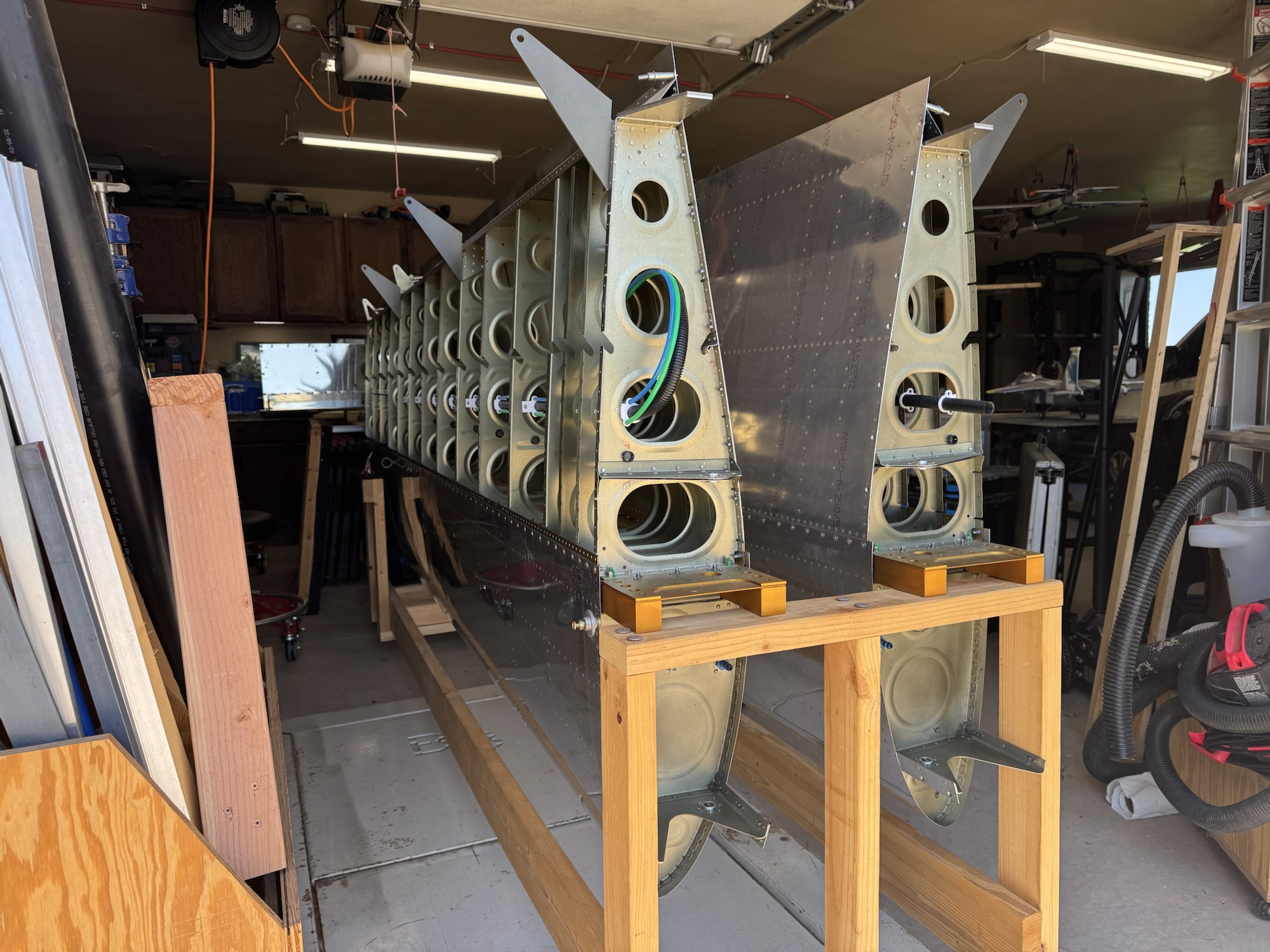
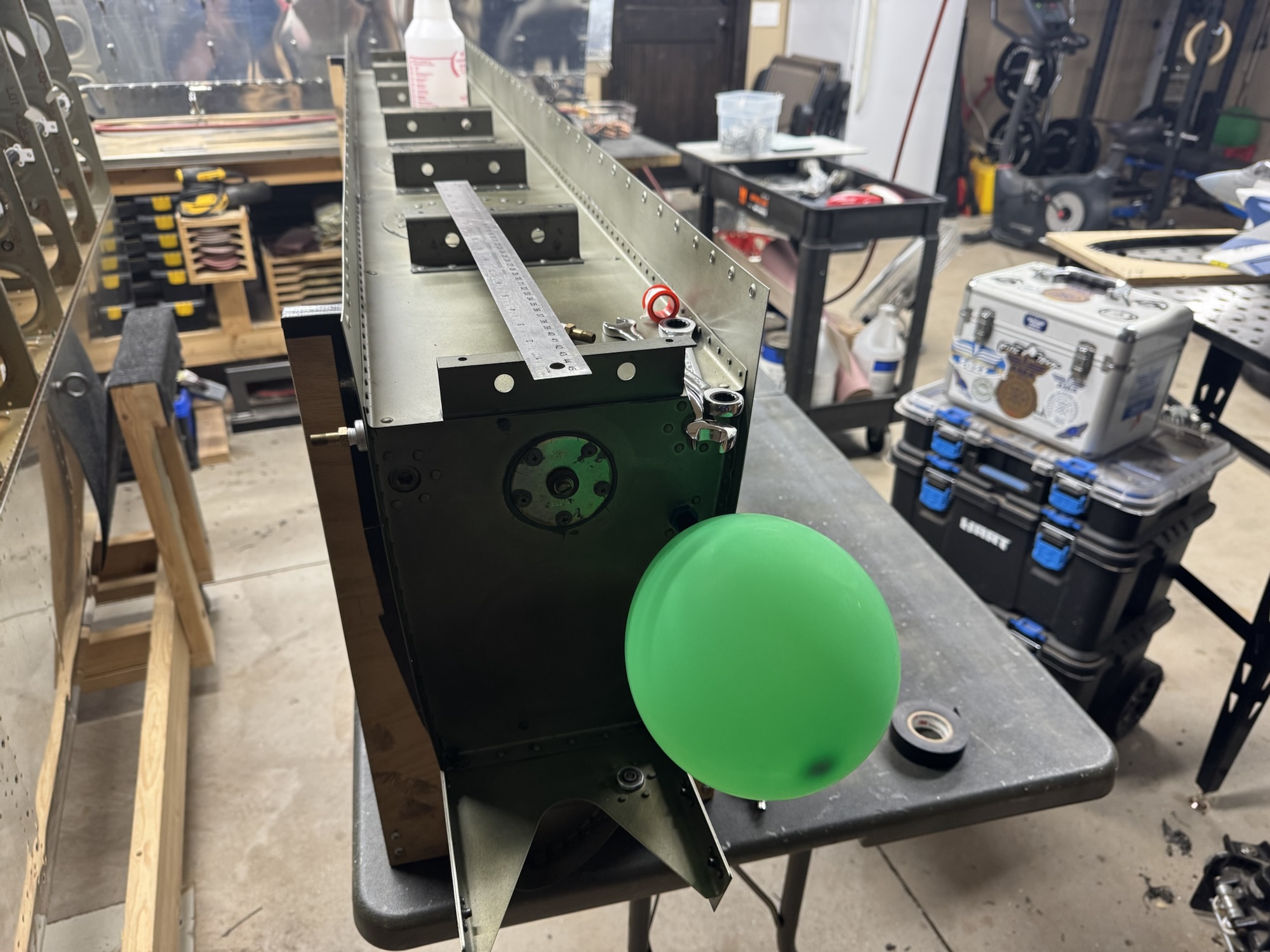
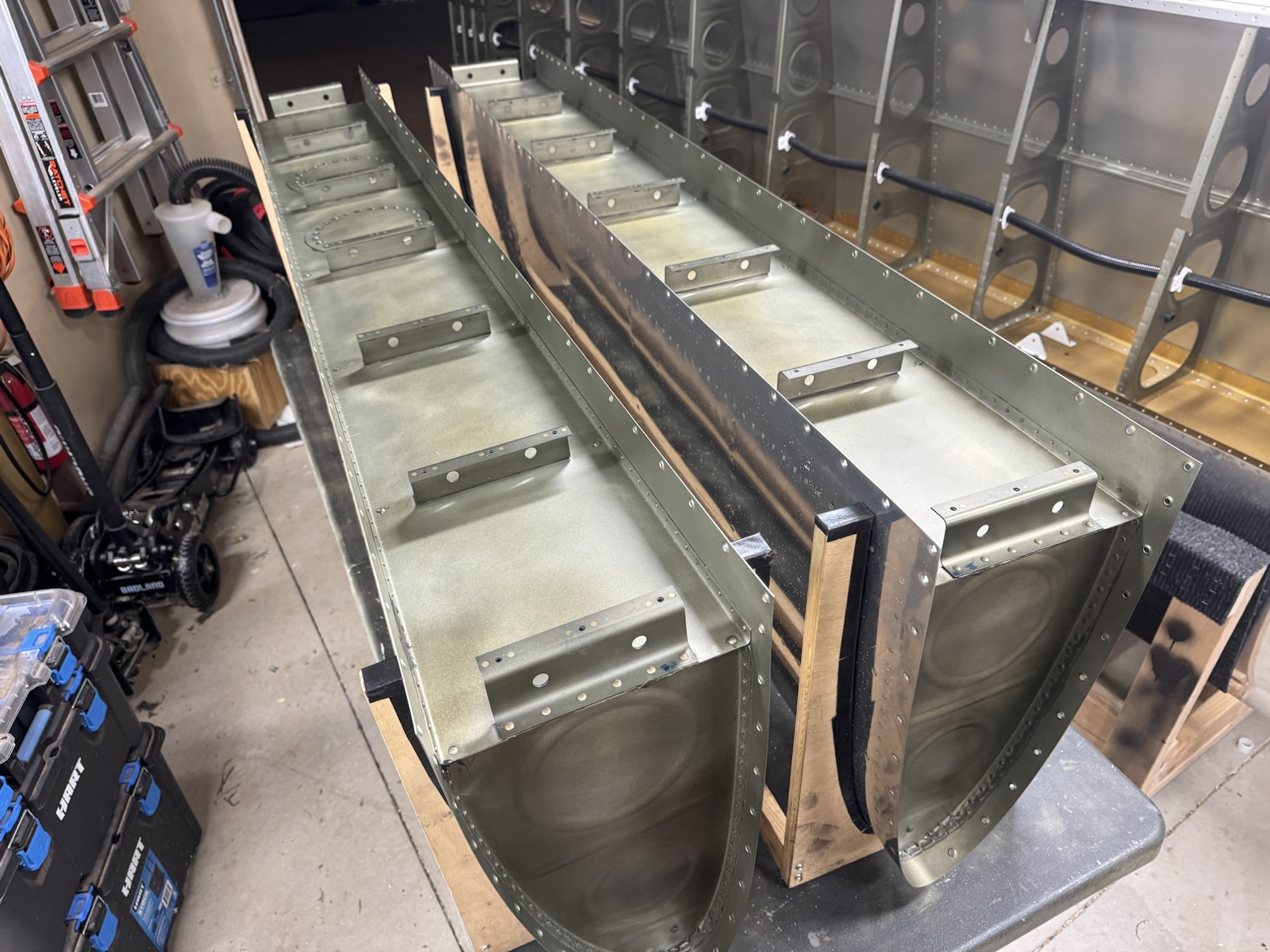
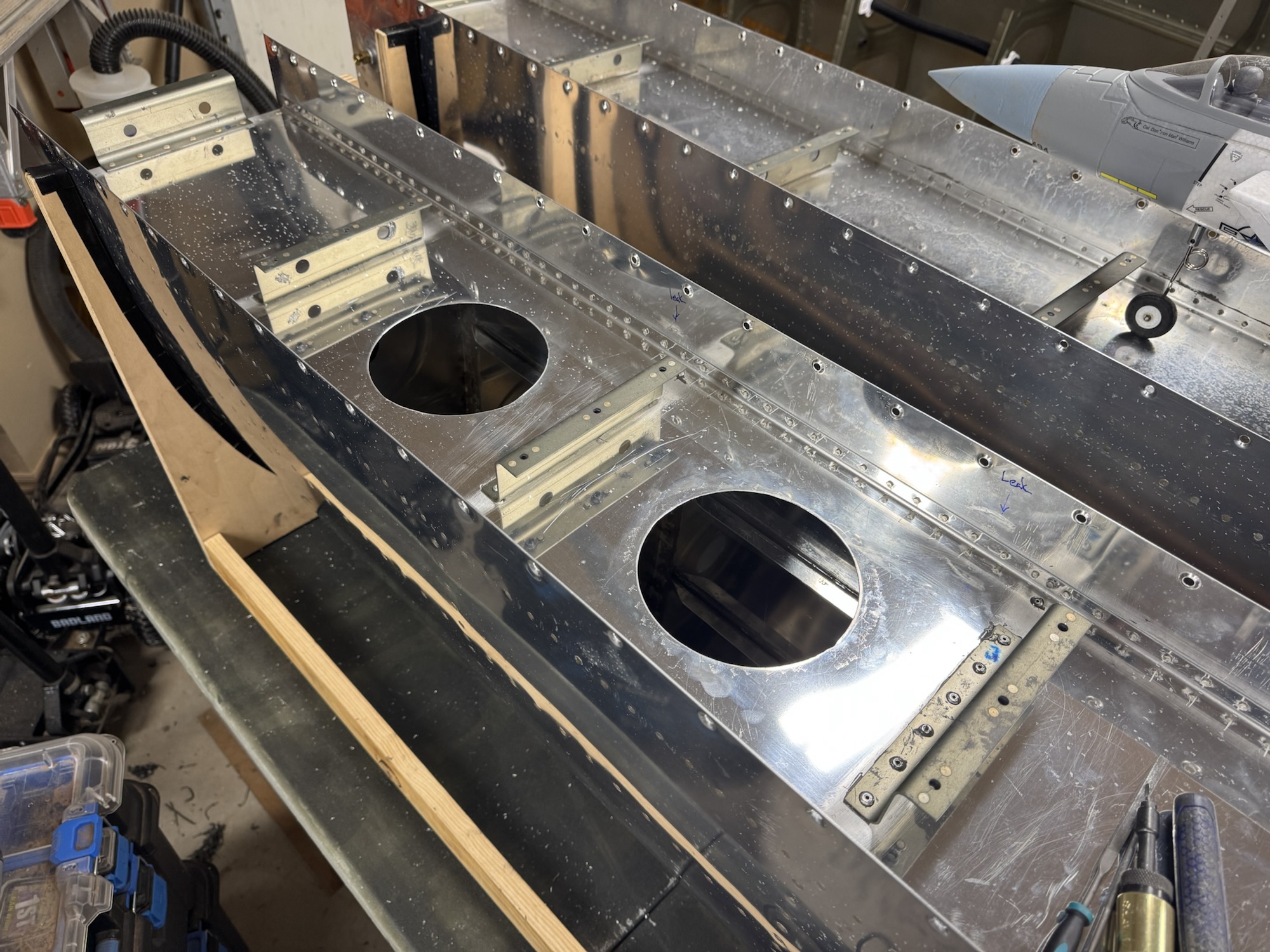
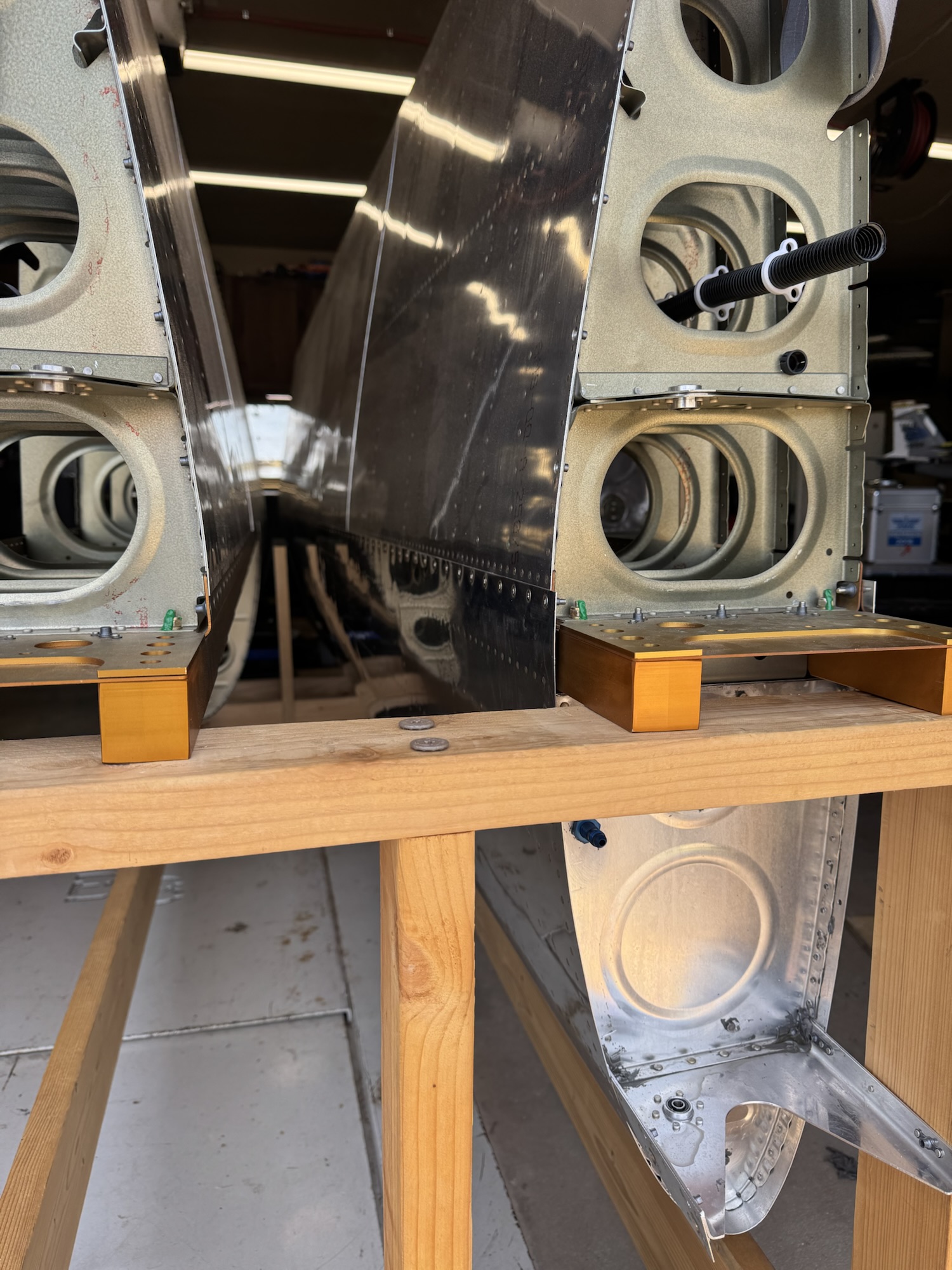
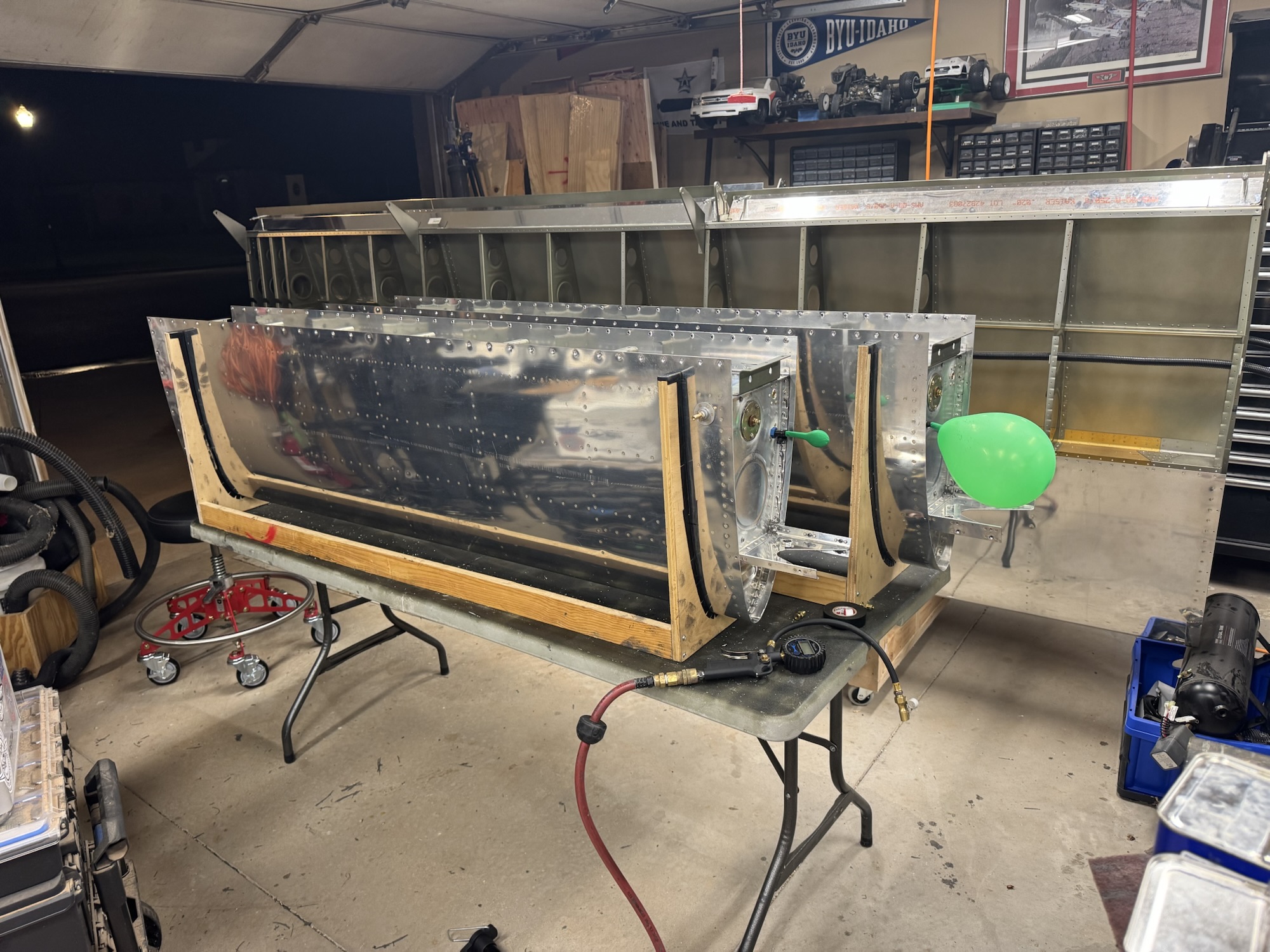
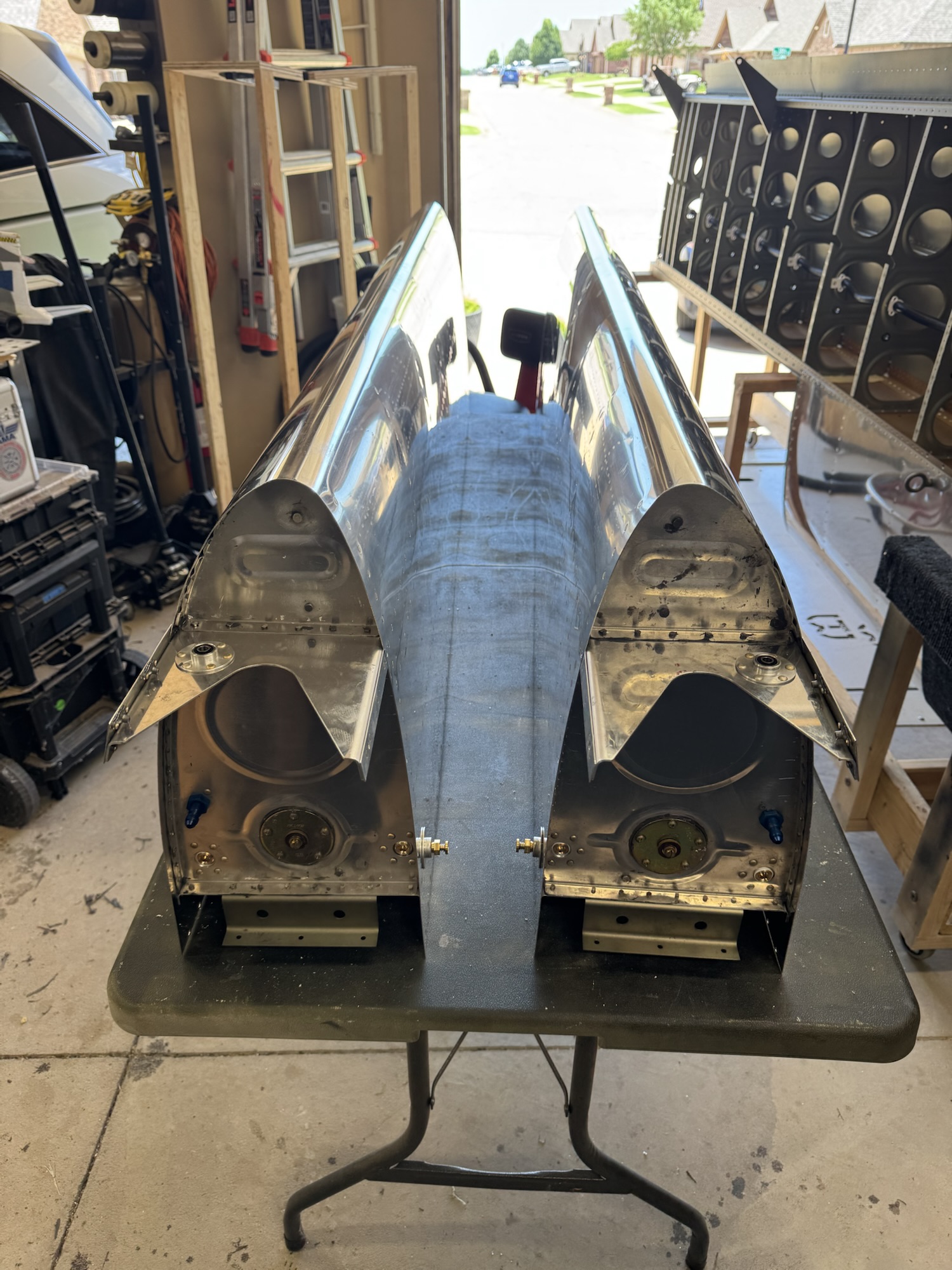
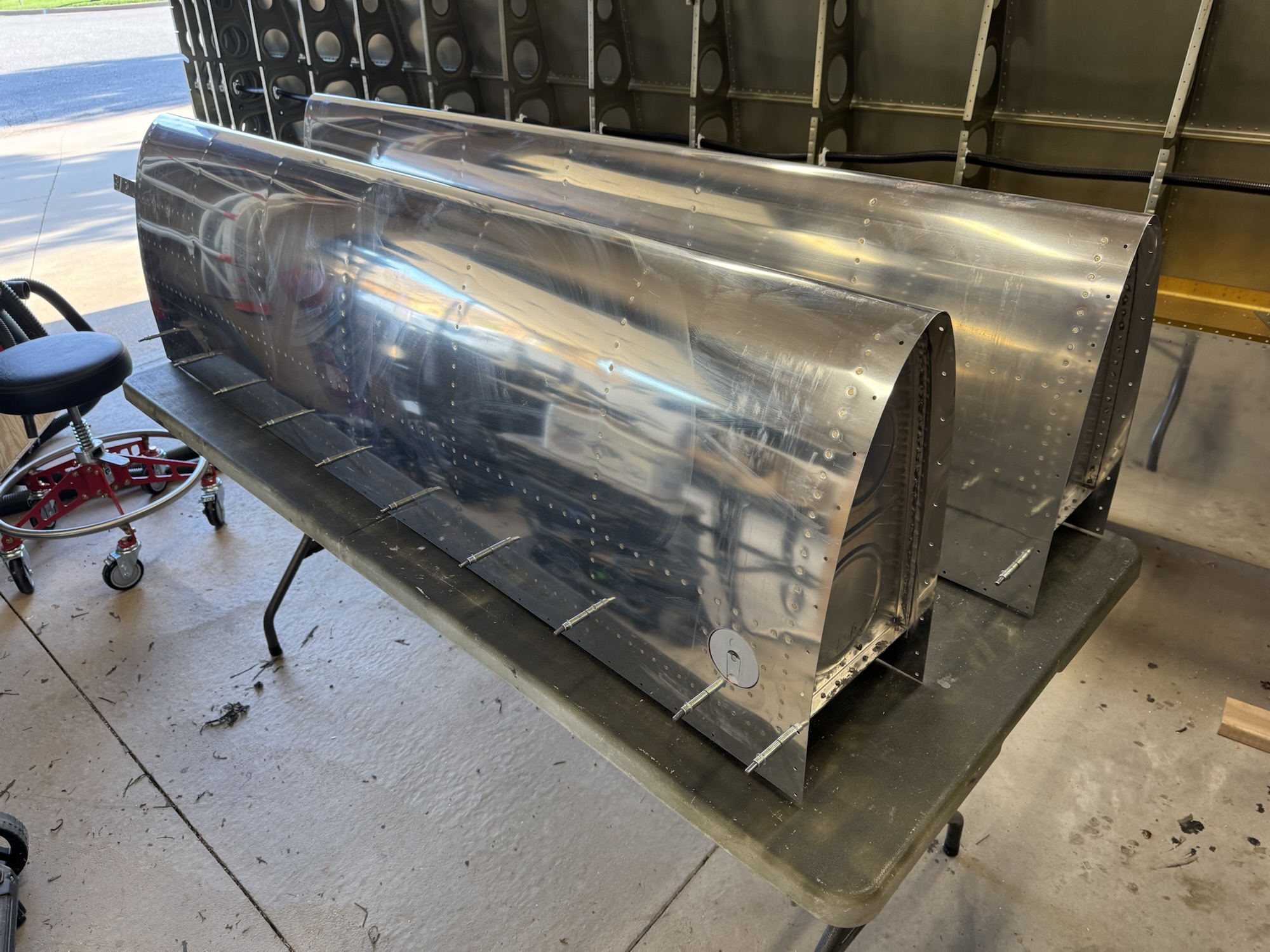
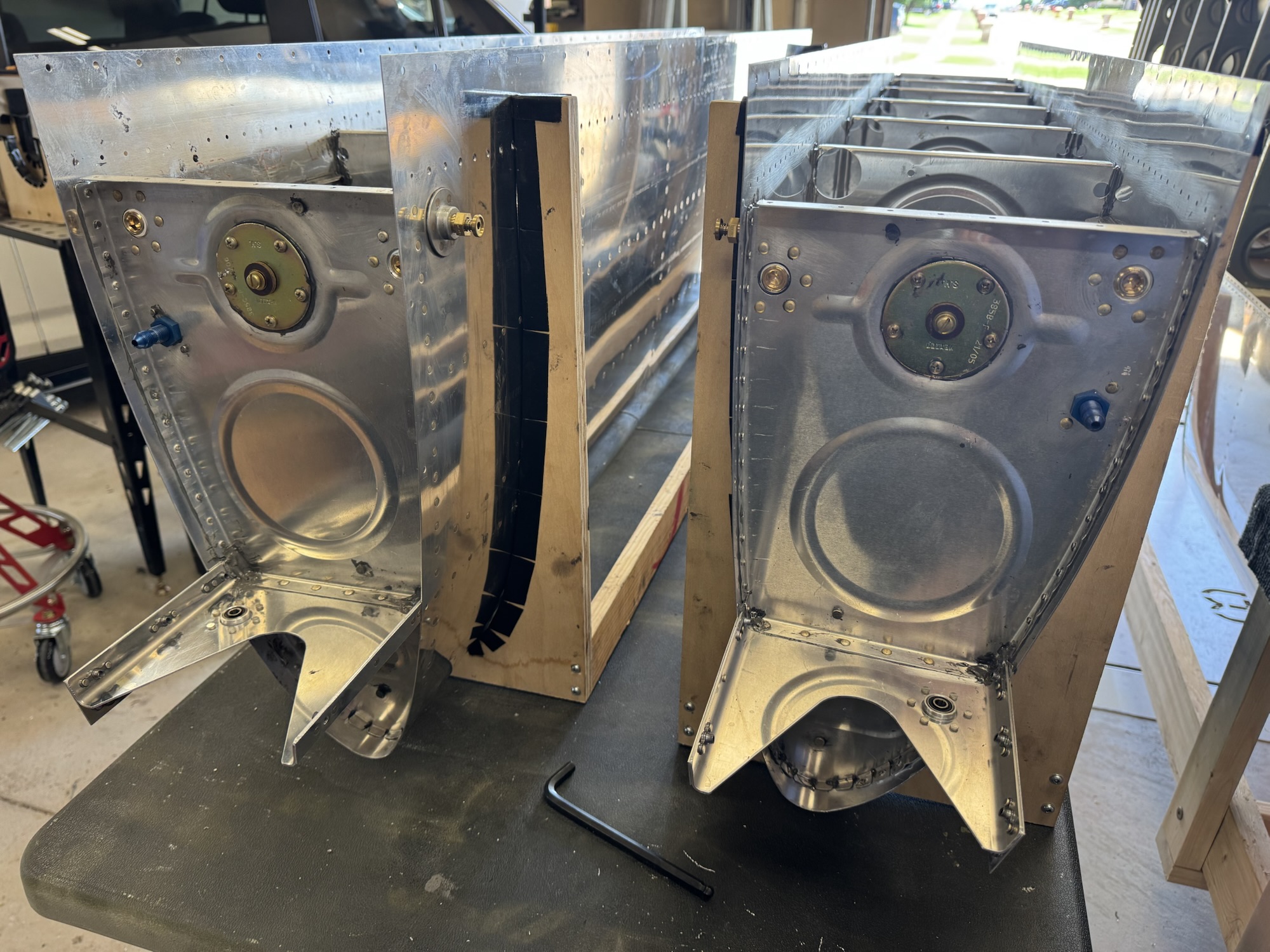
The fuel tanks are now 100% complete. The left tank held all of the pressure overnight and into this morning. I’m super happy that is now resolved and I will need to put that on my annual check to see how that sealant is doing. I might also see what I can do to build another tank later down the road to replace it with before I get a paint job on the plane. I’m glad it is solved for now!
I went ahead and verified that the right tank is 100% good. It held air for 24 hours so that tank is solid and sealed. I went ahead and had my wonderful wife help me reinstall a few bolts. I’ll get the rest of them tomorrow as I get time during the work day.
I tested the left tank and I don’t see any bubbles in the areas that had leaks previously so it is looking promising. I am going to leave it overnight and hopefully tomorrow morning the balloon is roughly the same size. It will shrink as the temperatures get colder but it should stay pretty much the same size. I’ll recheck it tomorrow night around 9PM and if it is still roughly 9 3/4″ in length, we will be golden!
I tested the tank this afternoon and one of the leaks is fixed and the second one is much better but still there. I don’t know what to do at this point as I thoroughly sealed that rear side of the baffle and even shoved sealant around the rib that was close to it. I went ahead and put some sealant on the outside and I’m going to have to research and see what my tech advisor says. I am re-testing the left wing tank which was good the last time I tested it just because I’m paranoid now. So far over the past few hours it has held pressure in that balloon so that is promising.
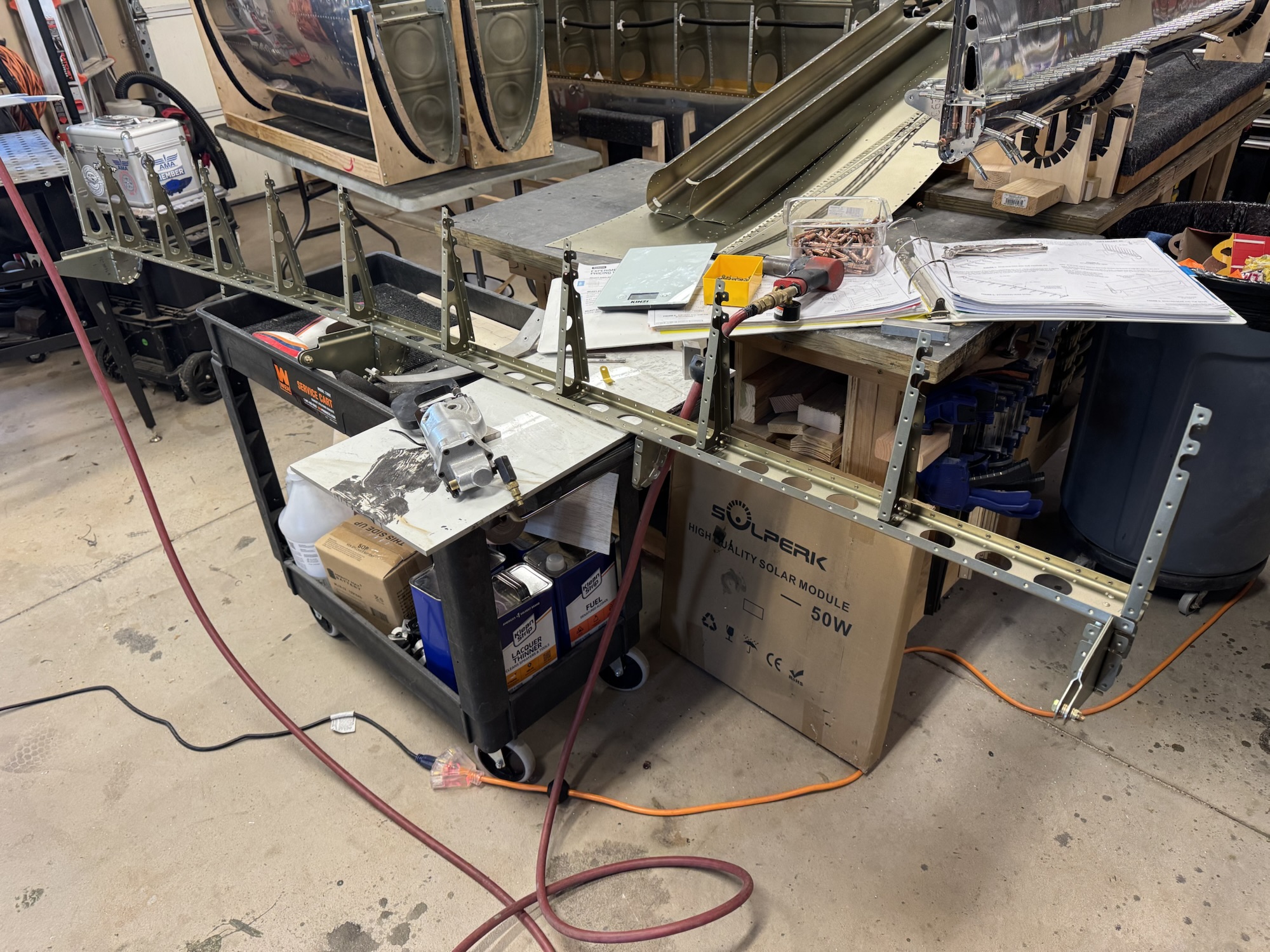
I got the frame or skeleton of the right flap completed tonight. Tomorrow I’ll start getting the skin put on it. I hope I have enough tank sealant left to do the trailing edge as it is asking for tank sealant. I might call Van’s to see if that 3M adhesive tank that they said we could use now is good for this or not.
Now I’ve not pressure tested it (boy I hope I got it all…) but I’ve sealed up the tank again, sanded the outside of the tank and primed it. Took a bit today but I got it all done. I really really hope it is sealed now. I put quite a bit of sealant along the rear baffle in those two sections of the tank so I believe I got it.
I decided to go ahead and prime the outside of the tanks just to make sure to keep the oxidation to a minimum on the plane but it looks like it beat me to it. I’m going to guess something in that soapy water mixture was corrosive to the aluminum as I noticed that both of the tanks had these spots over them where I had sprayed the soapy water.
I tried using acetone and NAPHTA on it but neither of them really helped with removing them. I was really hoping it was just residue of the soap dried on. So I’m going to have to see how to buff this off before I paint the outside of the tanks. I might just use the scotch brite pad to scuff the surface since I will be putting the primer on which is what they will be doing to the outside of the plane when I do the paint job down the road. Either way it all looks very superficial so I’m going to see how to buff it off and then prime.
But most of my time today was just removing the tank from the wing I installed it on. I also need to file down the outside edge of the skins just a slight amount as when I had it installed on the wing it overlapped just a tiny bit in certain areas. So I removed all of the bolts around the edge and on the rear Z brackets and put it back in its cradle. I might do one more test on this tank just to make sure it is sealed since I didn’t have good success with the second one.
Speaking of which, I cut open the two bays I had leaks in, cleaned it up and then inspected to see what went wrong. The cutting tool actually came in really handy! We had an EAA meeting that talked about it and demonstrated it so I decided to buy one since they were fairly inexpensive. It can be used free hand, with a stylus that allows you to follow a straight edge or that same stylus can be used to put inside of a hole drilled in the middle to allow for circular cuts.
Either way, in the third bay I can see where it might have an issue with the bead of sealant looking a little bubbled and messed up.
But the second one looked perfect! I have no idea where the leak is coming from here. I’ll just have to add more sealant over this section and since I’m in here I’m going to do it all across the rear baffle just so I don’t have to reopen this area again.
All in all, I’ll get started first thing tomorrow with putting the rear panel on temporarily to drill the rivet holes and then get the sealant put on and riveting the rear panels. Then I will scuff up the outside of the tanks (at least the non-exterior skin portions) and get them cleaned and prepped for priming. Then I will prime all of the parts for the left flap as well as the tanks at the same time. And if I have enough time left in the day I want to start assembling the flap. The garage is a mess right now with so many parts laying all over the place in various stages of build LOL.
After I fixed the two leaks that were near the gas cap, I went to pressure test it again and I had three leaks near the fuel level sender! I pulled the fuel level sender off and looked in and the bead looked just fine, which is the crazy part. So I attempted to seal it again using a longer popsicle stick which ended up making a mess…. I’m really not happy with how this turned out. I should have done the syringe like others had done. I got a chance to try that though because my attempt to seal that area up only sealed one of the three holes. The other two were still there. So I used a syringe this time to get it more precise, and that worked way better. I’m waiting on the sealant to cure before I test for the third time. Luckily the other tank was good to go and I installed it on the wing.
The first thing I got to was the tanks. My testing kit arrived and I got it all setup. Luckily the right tank did not have any leaks, but the left tank had two. But luckily those two leaks were right near the gas cap so I was able to reach them with my finger. I got them sealed from the inside and then I put a little on the outside that I will scrape some away later after it cures. I put a tiny bit of pressure on it so that it could push some of the sealant a little bit deeper into the leaking passages and I’ll leave it like that over night. It should be enough pressure to push some sealant in but not enough to blow a hole through it since that sealant is so thick.
I got the rest of the 40 rivets set and I drilled and dimpled the screw holes on the edge of the skin. Now I just need to let these sit for a few more days to make 100% sure they are cured and hopefully the pressure testing kit will arrive soon. Next step is the flaps!
The rear baffles and Z brackets have now been installed on both tanks! I’m so glad that part is done and I can’t wait for my test kits to arrive so I can verify they are 100% sealed. I know the front half is sealed so now I just need to verify that the back half is sealed. It looks very promising from the little I can see into the tank from the fill hole. Tomorrow I will remove the few clecos that are in it, countersink those holes and then install rivets, and then I will dimple the screw holes along the edge that are marked to be dimpled. Then they will be 100% complete and ready to install after pressure testing. Fingers crossed that they don’t.
The leak testing was successful apart from the caps and the seal I did on the fuel vent line. With those fixed it did not leak anymore. I went ahead and installed the fuel return ports so that I can have it there when I finally make my decision on the ignition/fuel system type. I also did one last look through and cleaned the tanks thoroughly so I could seal it up tomorrow.